
Embroidery or print: what actually lasts
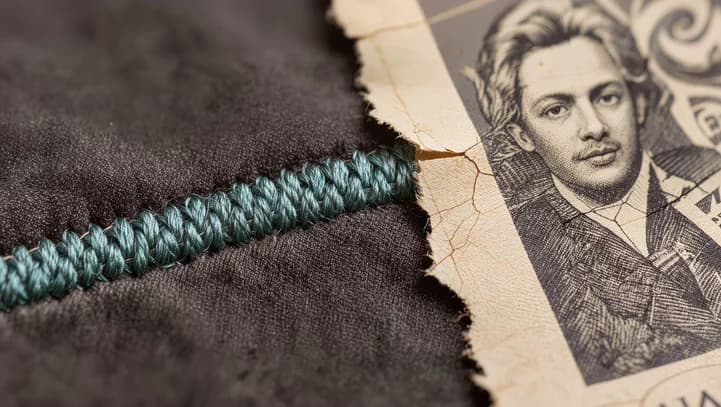
Both put your name on a cap. They age nothing like each other.
What each one physically is
A print is a layer of ink or vinyl bonded to the surface of the cloth. Embroidery is thread pulled through the cloth, so the design is built into the weave rather than laid on top of it. That single difference explains almost everything else.
After fifty washes
Prints fail at the edges first — a hairline crack, then lifting, then a gap. Heat is what does it, which is why a tumble dryer shortens a printed garment's life far more than the washing does. Embroidery has nothing to lift: the thread is anchored on both faces of the fabric. It can fade, very slowly, and a loose end can be trimmed, but it does not peel.
Feel and weight
You can feel embroidery with a fingertip; it has relief and a slight sheen where the light catches the satin stitch. That texture is most of why it reads as made rather than produced. A print is flat and, in volume, slightly stiff.
Where print still wins
Three cases, honestly:
- Photographs and gradients. Thread cannot blend. A photographic image has to be reduced to flat shapes before it can be stitched, and some images do not survive that.
- Very large areas. A back panel filled edge to edge is a great deal of thread, which means weight, stiffness and cost.
- Very fine text. Below about 5mm of letter height, thread starts to lose the counters inside letters like "e" and "a".
Cost behaves differently too
Print is cheap per piece once a design is set up and expensive to set up. Embroidery costs what it costs from the first piece, and a one-off is genuinely a one-off — which is why we will stitch a single cap with a single name on it and not ask you to order twenty.